- LifeVest Newsletter - Build Wealth Protect Wealth
- Posts
- 3 Crucial Warnings From The Oracle Of Omaha
3 Crucial Warnings From The Oracle Of Omaha
Warren Buffett

LifeVest Build Wealth Protect Wealth
December 09, 2025
In partnership with


This newsletter you couldn’t wait to open? It runs on beehiiv — the absolute best platform for email newsletters.
Our editor makes your content look like Picasso in the inbox. Your website? Beautiful and ready to capture subscribers on day one.
And when it’s time to monetize, you don’t need to duct-tape a dozen tools together. Paid subscriptions, referrals, and a (super easy-to-use) global ad network — it’s all built in.
beehiiv isn’t just the best choice. It’s the only choice that makes sense.
Introduction
Warren Buffett isn’t just one of the greatest investors of all time. He’s a living masterclass in compounding. When he launched Buffett Partnership Ltd. in 1956, he quietly delivered returns so extraordinary that they would become Wall Street legend: more than 30% a year throughout the 1960s. And when he dissolved the partnership, he didn’t leave his investors hanging. Instead, he handed them shares of an obscure, struggling textile mill called Berkshire Hathaway — a company he would later transform into one of the most powerful compounding machines in corporate history.
Since then, Buffett has turned Berkshire into an empire, delivering nearly 20% annualized returns for almost six decades. Few investors have matched that longevity, discipline, or performance.
Now, as Buffett’s era at the helm of Berkshire Hathaway nears its close, his words carry even more weight. Through his annual letters, public comments, and investment decisions, he continues to offer investors a steady dose of wisdom and, occasionally, warnings.
Today, he’s sounding three clear alarms about the current stock market. And they’re signals no investor can afford to ignore.
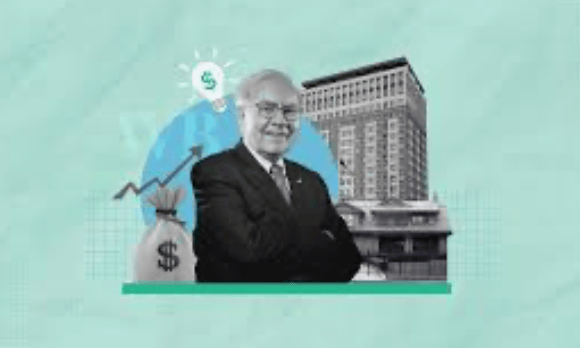
1. Berkshire’s Newest Record
Berkshire Hathaway has just set a staggering new record: as of the end of the third quarter, it’s sitting on $354.3 billion in cash and Treasury bills excluding railroad-related cash and Treasuries payable.
To put that into perspective, Berkshire’s entire marketable equity portfolio is currently worth about $314.5 billion. In other words, the world's most famous stock picker is now holding more cash than stocks.
This didn’t happen by accident. Berkshire has been steadily trimming some of its biggest winners, including Apple and Bank of America positions that have surged in value over the past few years. With valuations stretched, Buffett and his team appear to be signalling that prices no longer justify the risk. Selling now also lets them take advantage of today’s still-low corporate tax rates before they potentially rise.
Meanwhile, new stock purchases have been rare. And that creates an unusual challenge: with $354 billion to deploy, there are only a few opportunities large enough and attractive enough for Berkshire to meaningfully invest in.
2. Warren Buffet’s Surprising Move
For years, Berkshire Hathaway followed a rigid buyback rule: it would only repurchase shares when the stock traded below a predetermined valuation threshold. That changed in 2018, when the board scrapped the restriction and handed Buffett full discretion to buy back shares whenever he believed Berkshire was priced below its intrinsic value.
What followed was telling. Buffett turned buybacks into a near-quarterly habit, quietly signalling his confidence in Berkshire’s long-term value.
But that confidence has noticeably paused. Berkshire hasn’t repurchased a single share since early 2024 despite sitting on one of the largest cash piles in corporate history.
This isn’t a cash problem. It’s a valuation problem.
Buffett’s silence on buybacks is effectively an admission that even Berkshire’s own stock doesn’t look compelling at today’s prices. When the company’s most disciplined buyer refuses to buy, investors should take note.
Buffett’s reluctance to buy back Berkshire shares doesn’t just reflect one company’s valuation, it reflects the tone of the entire market. When even Berkshire, with its diversified earnings engine, looks too expensive to its own legendary buyer, it’s a sign of something broader: prices across the market have been pushed up far beyond what fundamentals justify.
Many companies with little exposure to real, sustainable growth trends are trading at levels that simply don’t match their earnings power. In other words, investors are paying growth-stock prices for businesses that aren’t delivering growth.
And Buffett’s message couldn’t be clearer: in a market this stretched, caution isn’t optional, it’s essential
Shoppers are adding to cart for the holidays

Over the next year, Roku predicts that 100% of the streaming audience will see ads. For growth marketers in 2026, CTV will remain an important “safe space” as AI creates widespread disruption in the search and social channels. Plus, easier access to self-serve CTV ad buying tools and targeting options will lead to a surge in locally-targeted streaming campaigns.
Read our guide to find out why growth marketers should make sure CTV is part of their 2026 media mix.
3. Unleashing The Power
Back in 2001, Warren Buffett wrote a now-famous Fortune article highlighting one of his favourite tools for assessing whether the stock market is overvalued. The calculation is simple: take the total market value of all publicly traded U.S. businesses and divide it by the nation’s gross national product. Today, it’s widely known as the Buffett Indicator.
Buffett acknowledged that the metric has limitations, but he also called it “the best single measure of where valuations stand at any given moment.” And he issued a clear warning: when the ratio approaches 200% as it did at the peak of the dot-com bubble, investors are “playing with fire.”
Right now, that ratio sits at roughly 223%.
Yes, there are reasons valuations should be structurally higher today: persistently low interest rates, global demand for U.S. equities, and a surge in long-term investment flows. But these forces don’t fully offset the reality that many large American businesses are staying private longer, keeping significant economic value outside the public markets. Even after adjusting for these shifts, the Buffett Indicator is signalling the same message: U.S. stocks look extremely expensive.
The Bottom Line
Taken together, the signals are impossible to ignore. Berkshire Hathaway’s record cash hoard, the halt in buybacks, the trimming of long-time winners, and a Buffett Indicator deep into “danger zone” territory all point to the same uncomfortable truth: Warren Buffett sees a market priced for perfection — and offering very few genuinely attractive opportunities.
This isn’t fear. It’s discipline.
For nearly 6 decades, Buffett has outperformed not by chasing what’s popular, but by waiting patiently for moments when great businesses trade at sensible prices. Today, he’s telling investors through action far more than words, that this is not one of those moments.
For us as investors, the lesson is clear:
Curb expectations, raise standards, and be selective.
In a market where valuations are stretched and fundamentals often lag behind excitement, the edge goes to investors who slow down, dig deeper, and refuse to overpay.
Buffett has built his career on the idea that opportunities always return and that the real money is made by those prepared when they do. Following that mindset now may be the difference between surviving the next correction and capitalising on it.
In a market full of noise, Buffett’s actions remain the clearest signal.
Happy Investing!!
Recommended Resources
Before diving into options trading, beginners should take time to learn and practice paper trading. While the lower cost of options trading can be appealing, it comes with higher risks that need careful management.
If you want to benefit from options trading, consider this online course conducted by Sean Seah, an International Speaker and Best Selling Author on the topic of Investing and Entrepreneurship. He is featured on Channel News Asia, News Papers, Radio and Investment Magazines. He is also frequently invited to conferences and shared the same stage as Richard Branson, Mary Buffett, Gary Vee, Steve Wozniak and many more.

Unlock Your Potential with Sean's Proven Options Strategies - The Ultimate Options Strategy Guide for Beginners
Dive into a curated collection of options strategies tested by Sean himself, complete with real case studies! This self-paced online course starts now and never ends—you set your schedule and progress at your own pace.
How long do you have access to the course?
How does lifetime access sound? Once you enrol, you’ll have unlimited access to the course across all your devices, anytime you want. Start learning today and unlock your potential in the exciting world of options trading!

An Investment into Your Financial Freedom is Your gateway to mastering the art of investing without wasting countless hours on dull webinars. With the Super Investor Club, you’ll gain the knowledge and strategies you need to make confident investment decisions and achieve true financial freedom. Join a community that’s as committed to your success as you are—because this isn’t just a membership; it’s an investment in your future. 💰💰
See what our members have to say!

Disclaimer: The information provided in this article is for educational and informational purposes only and should not be construed as investment advice. The views expressed are those of the author and do not necessarily reflect the official policy or position of any company. Readers should do their research before taking any actions related to the content. The author and publisher are not liable for any losses or damages caused by following any advice or information presented herein. Unveiling the Secrets of Growth Stock Investing!