- LifeVest Newsletter - Build Wealth Protect Wealth
- Posts
- War Scares, History Cheers: Stay Invested
War Scares, History Cheers: Stay Invested
When War Shakes the Markets

LifeVest Build Wealth Protect Wealth
April 21, 2026
In partnership with

Introduction
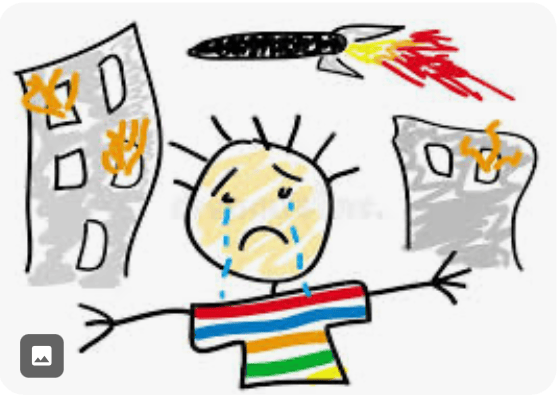
When war shakes the Market, the headlines scream. Oil prices surge. Analysts debate escalation scenarios by the hour. And in the back of your mind, a familiar instinct whispers: “Should I sell before things get worse?”
It’s a moment investors have faced many times before. When Russia invaded Ukraine in 2022, after 9/11, during the Gulf War in 1990. Each time, fear spiked, markets stumbled, and predictions turned grim.
And each time, those who panicked and sold locked in losses, only to watch markets recover without them.
Here’s the uncomfortable truth: while war is devastating on a human level, financial markets have historically proven far more resilient than our emotions suggest. Recognizing this gap between fear and reality is the key to avoiding one of the most common and costly, investing mistakes: selling at precisely the wrong moment.
Market Volatility Exposes Weak Delegation

When markets get shaky, advisors don’t just manage portfolios. They manage fear, questions, follow-up and a flood of client communication.
That’s where weak delegation gets expensive.
If meeting prep, paperwork, CRM updates and account admin still run through you, response times slip and the client experience takes the hit.
BELAY created the free Financial Advisor’s Delegation Guide to help you identify what to hand off, what to keep and how to stay client-facing without losing control.
Inside, you’ll learn how to reduce bottlenecks, protect responsiveness and free up more time for the work only you should be doing.
1. The Shock Is Real But It Fades Fast
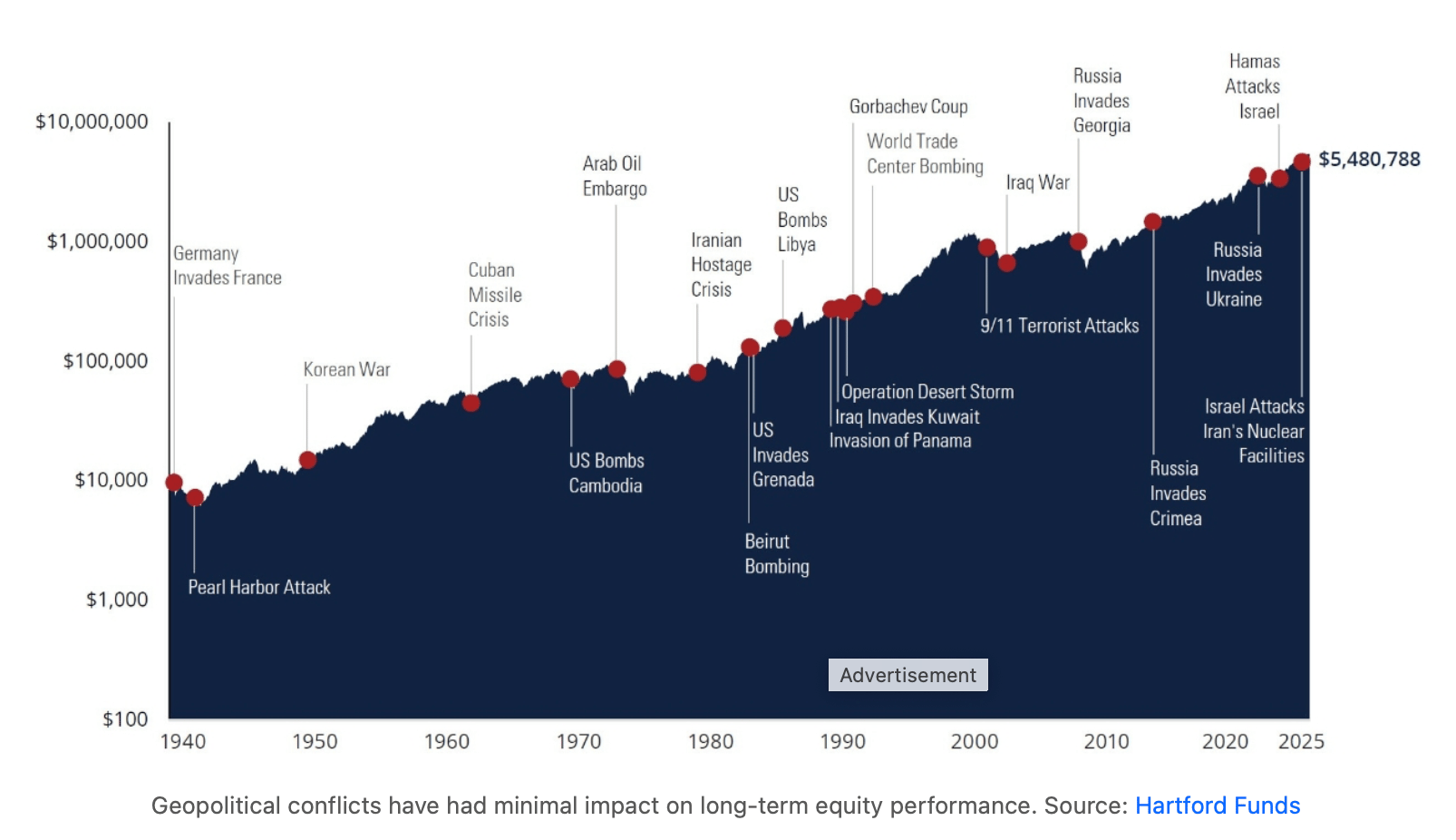
History shows that crises are temporary but compounding is permanent.
When war erupts, markets tumble. That’s the reflex. The stock market despises uncertainty, and conflict delivers it in spades: nobody knows how long it will last, how far it will spread, or what the economic fallout will be.
The drops can look terrifying. After 9/11, the S&P 500 sank 12% in just five trading days. Russia’s invasion of Ukraine triggered a global sell‑off. The Gulf War saw the S&P 500 slide 17% in mere months.
But here’s the twist: those plunges didn’t stick.
After the Gulf War’s 17% decline, the S&P 500 finished 1991 up more than 29%.
After 9/11, markets roared back 21% in just 10 weeks.
Since Russia’s invasion, the S&P 500 has climbed over 60%.
History is clear: the initial shock is sharp, but recovery is often swift. In fact, stocks delivered positive returns within one year of 73% of all armed conflicts since World War II. The longer you stayed invested, the better your odds became.
2. Energy Shifts amid Middle East Tensions
When tensions flare in the Middle East, investors immediately look to oil. Iran’s position near the Strait of Hormuz, a narrow passage through which nearly one‑fifth of the world’s oil supply flows daily makes the region uniquely critical. Any disruption to shipping lanes, energy infrastructure, or regional stability can send oil prices soaring in the short term.
Higher energy prices ripple through the global economy: inflation rises, transportation and production costs climb, and markets feel the pressure. Yet history shows these shocks rarely last. Within two years, the effects typically fade as global energy markets adjust whether through increased output from other producers, the release of strategic reserves, or shifts in demand.
The lesson for investors is clear: oil shocks are sharp but temporary. Markets adapt, and resilience returns faster than fear suggests.
3. Modern Wars and Market Resilience
Unlike the global upheaval of World War II, today’s conflicts are largely regional and contained. They are devastating for those directly affected, but they rarely disrupt the broader global economy. The U.S. , home to the world’s largest stock market, continues to operate with its infrastructure, technology, and financial systems intact. Companies like Apple, Microsoft, and Amazon keep producing, selling, and innovating, while billions of people worldwide still go to work, pay bills, buy groceries, and stream shows.
For investors, the key is perspective: wars may dominate headlines, but they seldom derail the earnings power of diversified, global businesses. Even during the Russia‑Ukraine war, which shook energy and food markets, the S&P 500 recovered and went on to hit new all‑time highs. The lesson is clear: modern wars create local shocks, but global business keeps moving and markets adapt.
5 minutes. Every AI story that actually matters.
The AI Report distills the day's most important AI news into one free 5-minute read. No jargon, no filler — just what 400,000+ business leaders need to know before their first meeting.
4. Avoid Emotional Investing Pitfalls
In wartime, it’s natural to see conflict as the greatest threat to your portfolio. But history shows the bigger danger is often emotional investing. Panic selling locks in losses permanently, and waiting for things to “feel safe” usually means missing the rebound. By the time headlines improve, the market has already recovered and the best days are gone.
The data is clear: some of the strongest trading sessions in history have occurred in the middle of crises. Investors who step aside miss them entirely. Once a conflict begins, markets shift from fearing the unknown to pricing in measurable risks. Uncertainty eases, expectations adjust, and stocks often rise without needing good news just less bad news.
That’s why the S&P 500 fell 12.3% in the 3 months before the U.S. entered World War II, but returned 16.9% over the course of the war. The anticipation was worse than the event itself. The lesson is simple: fear drives mistakes, discipline drives returns.
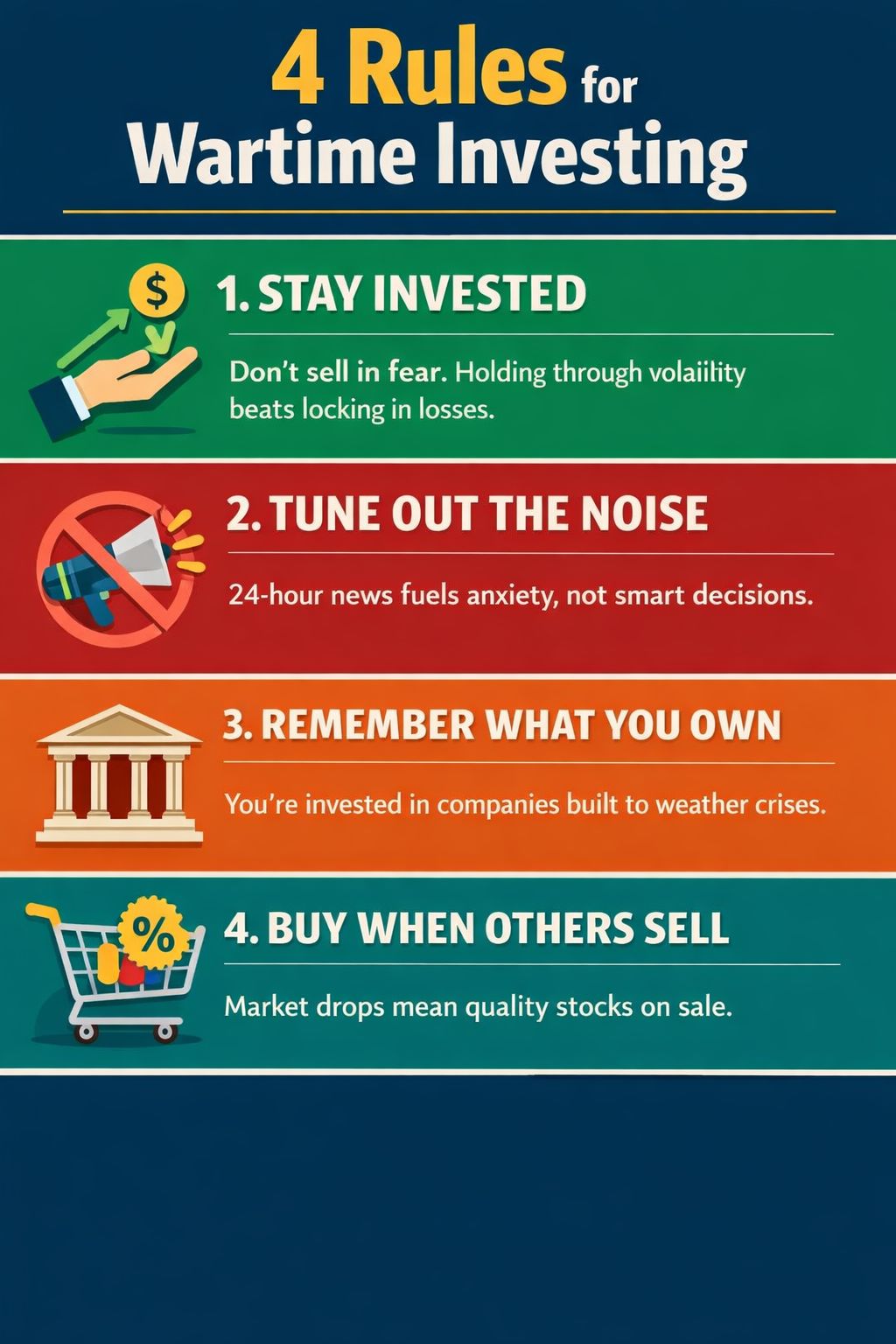
4 Rules for Wartime Investing
Happy Investing!!
Disclaimer: This article is for educational purposes only and does not constitute investment advice. The views expressed are solely those of the author and do not represent any company’s official position. Readers should conduct their own research before making financial decisions. Neither the author nor the publisher accepts liability for any losses or damages arising from actions taken based on this content.